Monday, May 27, 2013

Businessweek Gets Creative with Millennial Marketing


This month, another group of eager college grads leave their dream campuses and enter their professional careers. Or so they hope.

It is no secret the economy is better than it was four years ago, but things are still far from perfect. As a result, many move back home to live with their parents as they search for full-time jobs. Businessweek is now targeting those kids and parents.

Businessweek, along with Walrus, create an intriguing website that let’s parent co-habiting with their kids send them sarcastic and passive aggressive e-cards encouraging them to move out of the house. In return, if the parents fill out a form, they can get 12 free issues of the publications in print or digital. The magazine claims the kids would then have a chance to view the publication and hopefully see a tip or two to land a job faster.

Take a look at some of the e-cards Businessweek had in mind.


Now while I don’t feel that reading Businessweek will immediately land a millennial a job, I do understand the marketing tactic. While some may see these e-cards as mean and hurtful, I see them as a playful way of gaining a new audience. Many parents would love to have their children live with them for as long as possible and the kids know that. By sending these sarcastic cards, it’s just a way for parent and child to share a laugh. It is giving parents another way to connect with their children, something I imagine all parents want to do. In the process, Businessweek gains some new readers, both from an older generation and the millennial generation.

So while mean to some, I applaud these efforts. Way to go Businessweek. 

Monday, May 20, 2013

Can We Get Rid of Stupid Social Posts?


I don’t mean to keep coming back to the Boston Marathon Bombings, but another article in Digiday this past week got me thinking about meaningless social posts such as “Happy Friday” or “Our prayers are with you.”

While I understand the purpose of racking up these posts, such as joining the conversation, getting fans engaged or to show the public you are aware of major stories going in, it truly provides no value to your fans and just clutters up the online space we call social media.

I have said it before and I will say it again, fans follow brands on Facebook to either get discounts or to find sharable content that will make themselves stand out in their group of friends. All of us in the business know the leaps and bounds we have to go through to break through the clutter of all those messages out there. Needless to say, pointless posts like those mentioned above do not go toward discounts and will have no fans sharing, commenting or probably liking. Where is the engagement in that?

Perhaps these posts were the norm when social media was still coming into form. Now, simple-minded tactics like these do not work like they once did. When it comes to holidays, national tragedies, or major events in our society, do not join the conversation unless you have something valuable to share. With Boston, you should have kept quiet unless you were truly affected by the tragedy, know someone who was, or was doing something to make a difference. Same goes other talkable events.

Come one people, let’s graduate to the net level of social media strategy.

Tuesday, May 14, 2013

Kmart’s Ship My Pants Disrupting the Schema

I may be a little late to the party, but like many other internet users, I too saw the Kmart Ship My Pants video and thought it was a perfect mix of humor, information and marketing. In case you missed it, take a look.


Needless to say, the main reason this video garnered so much attention is because it sounds like “shit my pants.” As a 25-year-old kid, I have no problem with the verbiage. Ask a 65-year-old mother and you may have a different opinion.

However, looking at it through my marketing mind, I couldn’t praise Kmart’s creative and risky spot any more.

Like all marketing, we want people to talk about our products. In addition, we also want to inform the public of new services. This spot does both because it did a terrific job of disrupting the schema of the typical consumer.

What does that mean? Steve Knox, who I believed coined the term, said it best in a 2010 Fast Company article.

“You have many schemas operating at one time,” Knox said. “Here is one that you likely used today: When you got in your car, you had a schema that you would drive on the right-hand side of the road, and the person coming at you would drive on his or her right-hand side. You don't think about it. Your brain simply makes the assumption that this is how the world works.”

But what is someone was driving on the left-hand side of the road? Chances are, you would mention it to the next person you communicated with. Why? It disrupted your schema.

These types of ads are not common in our culture anymore. Some question the tactic, but the good marketers don’t run away from disrupting schemas. They welcome it, just as Bill Kiss, chief digital officer for Sears and Kmart, did for developing this ad.

“I wouldn’t call it hesitation,” said Kiss when asked if he had second thoughts. “I would call it healthy and direct conversation and debate. There was a lot of that. But I’m a marketer at heart so I know that if you really want to disrupt and get the point across, sometimes you need to break some paradigms.” In other words, you need to do something others won’t expect, like driving on the wrong side of the road.

Not that I have started shopping online at Kmart, but I truly applaud their marketing and risky behavior on their Ship My Pants campaign.

Monday, May 13, 2013

A Few Lessons from Mom

Yesterday, we celebrated Mother’s Day, a day to not only recognize the most important person in many peoples’ lives, but a day to look at back at some of the vital lessons our mothers have taught us over the years.

Like many people, I truly believe I have the best mother on earth. Her compassion, love and genuine care for my well-being is unmatched by any mother I have ever met. In addition, she instilled in me important life values that I have lived with, live with today and will hopefully continue to live with for the rest of my life.

Putting Others Before Yourself

Jackie Robinson once said “A life is not important except in the impact it has on other lives.” That is a terrific quote that far too many people forget. I may be terrific at my job, make lots of money or just live an entertaining life, but if I don’t make a difference in other peoples’ lives, what am I worth? The answer is nothing. My mother demonstrates and masters this rule better than anyone I know. She is not the biggest eater, but she is someone who would give up her first portion before one’s third. With arthritis or a bad shoulder, she is someone who would lift a weight before her ailing son. Fever, cold, flu or whatever, she is someone that would bring soup to those in lesser need. If anyone has an impact on other lives, it is my 
mother.

Understand Others Before You Judge

My mother recently sent a video entitled “This is Water,” which perfectly demonstrates the next lesson my mother emulates. It is a nine-minute video, but well worth your time.


One of the main takeaways from this commencement speech video is that we as human have choices before we judge someone. Even though the person in the front of you at Trader Joe’s may be taking her sweet time, she could have just lost a love one. She could have just saved someone’s life as a doctor hours before. She could be on her last dime in the bank. Or, to be honest, she could be a lazy mother who needs a kick in the ass. Either way, humans should always consider life in the other shoes before judging someone. I don’t always do this (as many don’t I assume), but my mother does. She shows compassion when anger is the typical reaction. She shows understanding when frustration usually boils over. She shows pleasantness even if it isn’t deserved.

For the sake of rambling on, this is where I am going to stop. I could go on and on about the values instilled in me by my mother like the importance of family, try hard, never give up and so on, but I want to invite my readers to share the lessons they have learned from their mothers. Share them in the comment section below or tweet me at @JacobHurwith.

Wednesday, May 1, 2013

We Are Our Harshest Critics; What’s New?


If you have been anywhere near the Internet lately, you have undoubtedly seen the new Dove ads. In case you missed it, take a quick look.

Not surprisingly, it shows how women portray themselves as uglier versions of who they are. When the artist asks the same questions to their friends, the images come out much brighter than those of the ones self-described.

While I applaud their effort and the connection people may make to Dove products, I don’t understand why these ads are getting this much attention.

Ask any women on earth and they will without question highlight their imperfections before their “beautiful” qualities. Some are rather crazy, like when a 90-IB women calls herself fat, but many others are just harsh critics of themselves. To be honest, I don’t see anything wrong with this.

Focusing on our imperfections makes us try harder. If the woman thinks she is fat, she will be more motivated to exercise and eat right. If a man thinks he is not ready for basketball season, he will go out and play every chance he gets. It is our imperfections, whether they are there or not, that push humans to the limits they can reach. While the same can’t be applied to one’s nose or ears, it can be applied to work life, family life, financial troubles and many others. Our imperfections drive motivation.

Do you agree? What were your first thoughts after you saw the Dove ad?

For a little humor, check out how men chose to describe themselves.

Tuesday, April 30, 2013

Mobile Starting to Replace Desktop


It is no secret mobile is starting to become the preferred form of technology and according to a recent article in eMarketer, desktops are starting to feel the brunt of the change.


As you can see, over the past year and half, mobile usage has increased 10.5% while desktop use just dropped 5% compared the six months prior. In addition, tablet users are reporting a 6% increase.

With this obvious change in user preference, I am surprised that more businesses are not solely focusing on the device we hold in our pockets 24/7. Companies continue to ignore design elements as well as strategic components needed to hone in on this ever-growing demographic.

Digital marketing, like many industries, continues to evolve. It is widely known that any company that doesn’t adapt to the challenges and opportunities they see every day, will undoubtedly fail.

The other day, I was showing my mother an upcoming race I just signed up for. Cutting them some slack, I realize many people will not sign up for 5-mile race on a mobile device (or maybe even tablet), but their website could barely be read on these devices. In the common day, especially when they make a different website each year for this race, why would they ignore mobile or tablet users? Laziness is my answer.

Consumers nowadays expect their technology to fit with the times. The times are calling for mobile and tablet friendly websites, emails and applications. Those who continue to ignore the trend will fall behind and become extinct before you know it.

Monday, April 29, 2013

We Are the News


Two weeks ago, as we saw the full aftermath of the Boston Marathon Bombings, I started thinking about the way we gather our news and how the process has evolved over the years.

As I noted in an earlier post, as soon as the bombs went off, I headed to Facebook to see what was going on. Coming from a journalism major, that is a pretty big deal. After all, I wanted live action from the people truly affected and Facebook is a great way to get it.

The opinions are unbiased, sadly something that is not always common with traditional news outlets, but more importantly, you can feel the emotion when you gather news from your friends and family. I could watch CNN for exclusive interviews from those involved, but why not get the same from the people I actually know and trust? When you think about it, it's targeted news.

All the advances with iPhones, mobile and social media have allowed the public to become our own news source. It is truly one of the great benefits our society has seen from technology over the past ten years.

I no longer have to wait for the Sun-Times to report who won the Sox game. I no longer have to wait for a phone call to hear if the girl of his dreams said yes to the big question (which happened this weekend by the way). I can get the news as soon as they share it with the world. Once again, targeted news for me when I want it.

Who needs traditional news outlets when you have your friends and social media? 

Thursday, April 25, 2013

DVR Has Nothing on this Commercial


Anyone who has ever met me knows my affinity for TV. There is nothing better than coming home after a long day of work and a run than sitting down on my couch, dinner in hand, and watching one my shows.

Like many other Americans, eight out of ten to be exact, I tend to DVR a show or watch it via Netflix, DVD, on-demand or HBOGo. According to a recent eMarketer article, of those eight consumers, 41% did so through cable or satellite on-demand, 40% did so through streaming and 37% used a recording device like a DVR. For the sake of this story, we are going to concentrate on that 37%.

If someone records a show on their DVR, chances are, they are fast forwarding through the commercials. Clearly, advertisers are not happy about this and have been paying the price this past decade. Until now, ad buyers and sellers had no response. Volkswagen just changed the game.


As you can see from the video, the commercial is viewed almost identically in regular time vs. fast forwarding. How are they the first ones to come up with this?

This tactic doesn’t mean much to marketers, but perhaps advertisers will now look for more creative ways to bypass the obstacles of our society.

Agencies, here comes the money. 

Wednesday, April 24, 2013

Social Media is the New News


If you have kept up with this blog, or many others for that matter, you have seen everyone and their mothers write about the Boston Marathon Bombings. Of the many lessons I have learned from this tragedy, one that stands out to me is that our entire nation is starting to view news in a different manner from different sources.

As a former journalist, as soon as news broke of the two bombings, you would think I would head to The Boston Herald or The New York Times. Not in 2013. The first news source I went to was Facebook. After doing a little digging, I found out I wasn’t the only one. Instead of hearing from the professionals, I wanted to see and view the story through the eyes of my friends and family. Just saying this puts a cringe in my stomach, but that is the way our world is going.

Who can blame us? When every citizen out there is their own reporter, with smartphones capable of taking HD video or photos and instantly posting them online, why wait for the dinosaurs to report? We now live in a day an age of the 24/7 news cycle and with the help of Vine, Facebook, Twitter and every other social network out there, professional news sources are losing credibility by the day.


I realize that any news I see on Facebook won’t be 100% accurate. Hell, it may not be 1% accurate. Nonetheless, the fact that a former journalist who still believes in the true power and responsibility of good reporting went to Facebook instead of an established news source shows that our world is truly evolving before our very eyes.

At school, they called the idea of citizens reporting the news citizen journalism. Supposedly, this has been going on for centuries. I wonder if they ever knew it would get this far.

Where did you go online when you heard of the Boston Marathon Bombings?

Monday, April 22, 2013

Recruiters Make Their Way to Twitter


Everything in this world is being simplified and moving faster by the day. Why should recruiting or searching for a new job be any different?

I was reading a recent article in the WallStreet Journal and found that recruiters and eager job applicants have made their way to Twitter to find a better future. I personally have not tried it, but I think this is a win-win for everyone.

As an experienced job seeker (sadly), I know the pain of looking for a new job. I know the draining feeling one gets as one applies for job after job after job. Just connecting with the hiring managers is a job in itself. Finding ways to attract their interest is the toughest part of the process. With Twitter, applicants, with very minimal research, can get front and center right away.

Then, job seekers must find a way to peek a recruiter’s interest in 140 characters or less. What do you say? I am looking for a job at your company and here is my resume. Where do you post the resume? How often should you reach out? If you are reaching out on Twitter, how do you segregate your personal life from professional? If a recruiter sees something in you, you can bet they will be browsing through your Twitter feed. These are just some of the questions all applicants need to ask themselves before reaching out.

On the other side of the coin, I see only positives for recruiters. I have never been a recruiter, but have been in serious relationships with two human resources professionals. They see thousands and thousands of resumes. They claim there is just not enough time in the day to respond to each and every resume that comes in. As an applicant, you have no idea how much this angers me. If I take the time to write a cover letter, update my resume and apply for your position, I think the recruiter or HR rep has time to send a two line email. With Twitter, it could take literally one minute to respond to someone on Twitter.

In addition, recruiters will be able to see what their applicants are like outside of work. LinkedIn is 100% professional and Facebook won’t allow recruiters to access certain pages (depending on the security of their profile), so Twitter is easily the best choice. Recruiters need to know about skills and traits that have gotten their applicants to where they are in the work world, but every employer needs to know much more than it if they plan on hiring them. Twitter accounts for that.

As you can see, I am a strong proponent of Twitter as a recruiting platform. Everything in life is moving faster and allowing less time (or characters) to react, but change isn’t always that bad. If you are looking for a new job, Twitter is a safe bet.

What do you think of recruiters using Twitter to find applicants? 

What Recent Facebook Changes Mean to Marketers


This past week, many social media goers noticed some changes to their Facebook, on mobile and on the desktop that both challenge and aid a marketer’s job in driving engagement with their fans and attracting new ones.

On mobile, Facebook now allows users to segment their newsfeed based on friends, following companies, music, games and so on. Marketers need to realize that now, no matter what non-paid tactic they implement, users have the ability to turn them off instantly. To be perfectly honest, many users will do this.

Just think of it from your perspective. I only follow brands if I have a deep interest in them (like the White Sox), if they are a good company to know about (future job possibly) or if I think I could get a discount/coupon down the road. However, no matter what, I will always want to see what my friends are up to before any company or team. This will probably never change and I can bet many people feel the same way.

On the other end of the spectrum, Facebook recently updated my account to Open Graph. It is truly amazing that I can search restaurants my friends like, games my friends are obsessed with or photos I have liked. That is incredibly targeted. In addition, you can also locate people based on their city, job or interest. The best part about it is that you don’t have to be friends with these people. Not that people put much of their professional life on Facebook, but it’s like Facebook is on the way of replacing LinkedIn.


So as any marketer can see, some change is positive and some is negative. Needless to say, like any business, Facebook is encouraging brands to spend more money on ads to better connect with their fans. However, if you have been posting engaging photos and posts that encourage your fans to act on your page, even with the segmentation, you should hopefully see little change with your analytics.

What do you think of all the changes coming out? Good or bad for us?

Thursday, April 18, 2013

Is All This Data Worth It?


No matter what industry you are in, companies need data to see how they are stacking up against their competitors and to learn everything there is to know about their fans. We all say we need it and if we had it, we could do great things. However, unless you have the resources to make sense of this mountain of data, 
this strategy may not be right for you.

According to a recent eMarketerstory (and for you daily readers, I bet you are starting to see a trend on where I get my blog ideas from), six out of ten marketers in a CMO Council and SAS survey said big data was part opportunity, part obstacle, yet still have a ways to go.


Immediately, that tells me that companies are just following the trend. Like Pinterest, content marketing, Instagram and many more fads in our industry, marketers think they need to stick with the times, even if that channel or tactic doesn’t mesh with your company. Certain companies do not need to be on Pinterest. As much as we say it at work, certain companies do not have a good enough story to implement a word of mouth marketing program (hint: topic for tomorrow’s blog). Big data, like everything else, is not right for everyone.

Take WOMMA for example. We preach on and on how we want to learn everything there is to know about our most loyal fans. I whole heartedly believe that to be true. In order to do this, it takes research, surveys (which less and less people are taking nowadays), time and money. And even after all this, it takes even more time and money to make sense of it all and implement a strategy using this new information. Certain companies just don’t have the resources and if you can’t do things right, why do them at all?

My point is that not all marketers need to do what everyone else is going if it doesn’t work for them or their company. Big data, despite its relevance to understanding your audience, is not for everyone. If you don’t have the resources to invest 100% energy and effort into something, don’t do it.

What’s the point?

Wednesday, April 17, 2013

WOMM is Not for Everyone


Last week, I had the privilege of interviewing one of the biggest names in word of mouth marketing. I am not going to reveal his name, but believe you me, he knows what he is talking about when it comes to WOMM.

The interview was about his upcoming WOMM-U presentation for WOMMA, but one of his answers really stood out to me. When I asked what are his fundamentals of WOMM, he went over four tests that every WOMM program need to pass. He then iterated that if your program didn’t pass each test, word of mouth marketing is not for you. I decided to share this because even if you are not trying to implement a program like this, any company, no matter the size or business, should pass each one. Let’s jump into it.

Is Your Story Interesting?

Needless to say, your company’s story needs to be different. It needs to provoke an emotional response from your fans that encourage people to talk about it. If you are content with being a boring insurance firm, which is not always the case, then WOMM is not for you.

Is Your Story Relevant to Your Audience

Not every story is going to resonate with everyone. For example, many new moms love to write everything that happens to their new baby. Being a 25-year-old single male in Chicago, you can imagine how little interest I have in these types of blogs. Then again, I am not their target audience. If your target audience doesn’t find your story relevant, then you are missing the big picture.

Is Your Story Authentic?

We put a big emphasis on ethics at WOMMA and for good reason. All good WOMM programs have an authentic story behind them. People hate being lied to and enjoy the classic tale of new business owners coming from nothing to making it big. Make sure you find your true angle of your story and highlight it.

Do People Care?

Most importantly, do people actually care about your brand? In the interview, the interview even said, “Do people actually give a fuck?” He’s right. If people don’t care, why in the world would they tell others? They wouldn’t. In order for people to stick their neck out and recommend your brand, you better have some conviction behind your company’s mission and that comes from an interesting, relevant and authentic story.

So does your word of mouth marketing program pass the four questions?

Tuesday, April 16, 2013

Social Media has Caught Up with the Times


Yesterday, America witnessed another horrific action that will go down as a dark day in this country’s history. Two explosions rocked the Boston Marathon Monday, April 15th, leaving at least three dead and over a hundred wounded at the time of this post. It’s like these events just won’t stop.

Last year alone, we saw a massacre at Sandy Hook Elementary School killing over 20 children and another shooting at Movie Theater in Colorado killing 12. Combine that with the standard (and I realize how sad that is when I say standard) shootings every day across the country (especially in Chicago) and we just realize how inhumane our country really is.

Like any event of this nature, as soon as it happened, all social channels were turned off at WOMMA. Blogs, events, marketing news, membership, none of that matters in days like this. Any company who thinks otherwise should be out of the job. Sad to say, this wasn’t always the case.

After hearing about the shootings, I went to Facebook to see reaction around the country. The fact that I went to Facebook as opposed to CNN or New York Times is a topic for another day. Nearly across the board, I saw images and words expressing their condolences to anyone affected by this horrific action. Yes I saw some promo posts here and there, but mostly, whether it be a friend or a company I follow, the message was united and clear.

This has not always been the case. Even in extreme times of worry, certain brands just don’t understand the magnitude of dire events. I bring up the following example because it not only shows the true danger of scheduling messages, but also that some companies just don’t get it. After the Batman incident in Colorado, the NRA sent out a tweet the following morning (let me repeat, the following morning), “Goodmorning shooters. Happy Friday! Weekend Plans?” The outrage was huge both online and offline. After Sandy Hook, NRA made a wise choice and stayed silent across their channels.

I truly believe brands, agencies and most importantly, humans have come to realize there is more to life than work and money. It is moments like these that make you appreciate your health, your home, your friends, your family and your life. Sometimes, we sadly need these types of reminders to bring us down to earth, but judging by the reactions online yesterday, our society is moving in the right direction. 

Monday, April 15, 2013

Blogging is the Way to Go


I have said it before and I will say it again. Consumers are getting smarter and smarter every day. Brands need to connect with their current fans and new fans through different means than the ones that worked years ago. Undoubtedly, one of the best ways to do that is through blogging.

People do not want to be sold to. To be honest, people really don’t even like salespeople. They are pushy, persistent and really just bothersome. Blogging gives companies a way around this. Blogging gives brands the chance to show off their true knowledge of their products and services, but more importantly, the industry and the world in general.

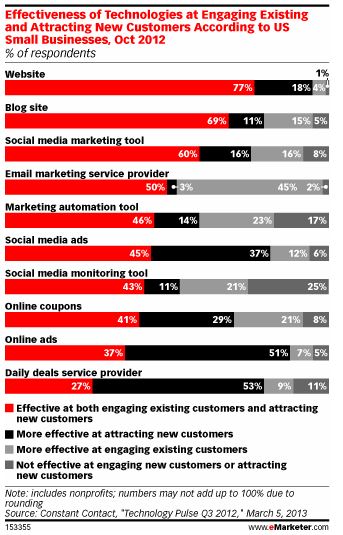
Fortunately enough, CEOs are starting to see the big picture. In a recent eMarketerarticle, blogging was listed as the second most effective tactic small businesses use to engage existing consumers and attract news ones, only eight percentage points behind websites.


If small businesses, who don’t have as many resources, as many employees, as much money or as much time, realize this, how is every Fortune 500 not following suit?

Blogging doesn't go out and annoy potential customers. Blogging brings those potential customers to your site. If you are able to collect and articulate relevant data and content that your audience cares about, the sales will certainly follow.

So go out and start writing, no matter what industry you are in. 

Friday, April 12, 2013

Friday Funday Post: The Shamrock Shuffle

This past Sunday, I had the chance to run in my second Shamrock Shuffle. While I didn’t get to run with my favorite partner in the world, Rachel, it was a fantastic day running five miles with all the guys.

Unlike last year, I am very happy to say that many of my close friends have gotten into running. I don’t think any of us really know why we do it; maybe to stay in shape, maybe to prove something or maybe to show off. Either way, I don’t care. Any opportunity to forget about work and real life problems and hang with the guys I love is a perfect day for me.


But this post, as the title suggests, is my chance to write about something just for the hell of it and I want to chat about the reasons I run.

Like everyone else, I don’t particularly enjoy running. I’d like to say that it clears my head, but it really doesn’t. Unless I am deep in thought about the run, I am usually thinking about money, work, girls, or what I am going to eat after the run. Either way, the mind is not clear.

And if you think I am trying to show off by saying I can run far, please. That just isn’t in my DNA.

Undoubtedly, I run to prove I can do it. Running is about pure determination. It is not about strength. It is not about physical stamina. It is a pure battle between you and no one else and I love it. If you can’t make that distance, you have no one to blame but yourself. If you can’t beat that time, you have no one to blame but yourself. No matter your goal, the only person stopping you is yourself.

Sadly, many aspects of life are not the same. At work, there are issues out of your control. With health, there are certain hereditary limitations some people can’t get over. For life, there are certain setbacks people are just born with. However, when it comes to running, no matter what, you control your conclusion. Wouldn’t have it any other way. 

Thursday, April 11, 2013

Publishers Can Not Pay Journalists for Traffic

The other day, I was reading an article in Digiday about certain publishers such as Forbes and Gawker, and brands for that matter, paying their writers based on the traffic their articles bring in or the number of new Twitter followers they accumulate. Can we put a stop to this right now?

As a former journalist and current blogger, I will be the first to admit that our profession has been lucky in the fact that we have never been paid based on results. Traders are based on the money they gain. Real estate brokers move up in the world based on the number and size of the deals they close. Teachers are retained based on the test results of their students. Journalists, whether their stories are read or not, are kept around as long as they produce good quality content.

Now, publishers are making a change and paying their writers based on the traffic they bring in. After all, the quality of a story can only be judged by the number of people who read it. However, the very premise of this tactic violates some of the basic rules of journalism.

First and foremost, journalists write for the community they serve. When they start to get paid based on traffic, the obligation moves from community to the owner or CEO of the publication/brand. If journalists start to get paid based on readership, no matter what the story is or how relevant it is to the community, every writer will have to ask themselves if this is a story the owner or editor would want to publish or will it bring in additional readers. Writers can not and should not be worrying this.

Quote color and paraphrase fact. It is a statement every journalism graduate has heard. But once these same journalists start to get paid based on readership, this rule in the back of their head will change. Even if you get your source to quote something every paper would love to hear, the writer will once again go back in his head and ask themselves if this is the quote that will bring in additional readers. Even worse, what if the writer is having a bad week and all of a sudden, he gets a source to admit to something wrong. However, it still isn’t juicy enough. If the writer’s salary is based on viewership, what are the odds the writer changes up that quote? We like to think this never happens, but we all know it does. If we move to this new system, we know how prevalent this could become. 

Once again, writers have gotten off easy by not being paid based on results. Offering more money for additional traffic is great motivation to get better stories, better sources and better quotes. Nonetheless, the negatives far outweigh the positives. Honest and ethical journalism, as we know it, will die if more publishers start to pay their writers based on traffic. 

Wednesday, April 10, 2013

SEC Allows Public Announcements on Social Media

It feels like it wasn’t too long ago that wealthy business owners were saying social media was just a fad and it was only a matter of time before it went away. Well, last week, the Securities and Exchange Commission took one more step to deter those naysayers as they are now allowing public companies to announce key announcements on social as long as they tell investors which sites they will use.

In a day when the press releases loses more and more significance and print journalism is hanging on by the threads, it is no shock the SEC decided to take this route. Furthermore, jumping back to those pessimists, the SEC claims part of the decision was made to help companies become more social literate.

After a company announces which social media site they will be using, via their website, press release, email, etc., investors are encouraged to then follow them on the channel and check back often for important data. Good in theory, but is this type of information too valuable for the online world?

Given that the shelf life for any tweet is now under four minutes, I feel the SEC made a mistake. While I love the fact that they are trying to encourage an older generation to catch up with the times, too much money is at stake with a platform that is foreign territory to some.

Let’s say company X chooses Twitter (which I hope most don’t), how many tweets are suitable for an announcement? One? Three? Ten? Twenty? Even though a user follows a company, that doesn’t mean they will see all their messages. I follow about 1,100 users on Twitter and I have never seen a tweet from at least half of those.

As someone in the industry, I know how to set up listening tools and lists to block out all the other news coming my way, but many don’t know how to do this. Keep in mind, I use social to basically disseminate and acquire new information. If I miss something, I miss it. However, when it comes to public traded companies, real money is at play. It is just too risky.

If I was in investor, I wouldn’t be too happy with the SEC right now.

Tuesday, April 9, 2013

How One Brand has Changed the Social Marketing Game Forever

Anyone involved in the digital world has undoubtedly seen or heard of the Oreo tweet that was sent out during the blackout bowl on Feb. 3, but has everyone truly appreciated the real effect that it’s about to have?

Just in case you missed it, here is the tweet that has garnered over 16,000 retweets and 6,000 favorites:


Despite its tremendous reach, this tweet has had a far bigger impact on the marketing world. As soon as the lights went out in New Orleans during the biggest sporting event of the year, the Oreo and 360i social media teams were more than prepared to jump on the opportunity.

Before the game even began, Sarah Hofstetter and the 360i team assembled an on-call team in their New York offices with representatives from Oreo present as well, so that any idea that sparked could be posted as soon as possible. Man, did it count.

Bear in mind, the Super Bowl is played on a Sunday night; non-business hours for many.

However, in the 24/7 ON cycle of social media, real-time marketing is where the industry is going.

None of us like to admit it, but we all schedule tweets, Facebook posts or LinkedIn messages for the weekend. After all, it is the weekend, so who wants to work? I know I don’t.

But after Oreo’s and 360i’s genius play during the Super Bowl, more and more social media directors, coordinators and CMOs will find themselves on the social media frontlines at ever-more irregular times.

The money spent on those extra hours won’t compare to the opportunities brands can capture in real time. Eventually, this mindset may even replace the expensive Super Bowl ads themselves.

Even before the big game, many big-name brands were quoted saying they chose to forego the standard Super Bowl ad and just concentrate on digital before, during and after the game.

If you were well prepared and creative like Oreo, I bet that investment paid off.

The immediate response to the Oreo tweet may or may not have a resounding effect on the public audience, but either way, the power and precedence it will have on our industry as a whole is starting to take shape.

This article was originally published on the Brandwatch blog.

Monday, April 8, 2013

When to Send that Email

Marketing departments fret at this issue each every day. We want to announce our products and services to the world and picking the right channel is hard enough, but now we have to know when our consumers want to view our messages. When it comes to email marketing, few have the answer.

Talking to many in the industry, most marketing pros will say to send the email early in the morning before people’s inboxes start to pile up. Others say send it during the lunch hour because people are more relaxed. Some, and not many by my experience, say to send it later at night. In fact, in a recent study by ExperianCheetahMail, emails sent late at night performed better than any other time of the day.

Emails sent between 8 P.M. and 12 P.M. accumulated higher open rates, clickthrough rates, sales leads and sales.


Looking at the image above, the number that should jump out at you is the revenue per email. For the late night emails, that average jumped to $0.48 per email. That is more than double compared to any other time of the day.

Despite numerous studies such as this being released, we still have a long way to go before companies start adopting the tactic. The first issue that comes to mind is that most of us are not working past 8 P.M. With the rise of real-time marketing and immediate customer service, consumers want everything right away. If they have any questions about the email, those will all have to wait until the morning.

The second problem I see is that if all f us adopt this strategy, sending emails at night will become the norm. More people are opening and clicking through these night emails because first, we all have smartphones, but second, because it’s not common. Everyone likes being part of something different, but when more brands start sending emails at night, it will become the norm and people will lose interest.

Brands need to send emails when their fans want them. The best way to find that perfect time of the day is to ask them. Target your emails. Segment your lists. Always, listen to your fans. Do all this and your email marketing program will do just fine.