Thursday, April 18, 2013

Is All This Data Worth It?


No matter what industry you are in, companies need data to see how they are stacking up against their competitors and to learn everything there is to know about their fans. We all say we need it and if we had it, we could do great things. However, unless you have the resources to make sense of this mountain of data, 
this strategy may not be right for you.

According to a recent eMarketerstory (and for you daily readers, I bet you are starting to see a trend on where I get my blog ideas from), six out of ten marketers in a CMO Council and SAS survey said big data was part opportunity, part obstacle, yet still have a ways to go.


Immediately, that tells me that companies are just following the trend. Like Pinterest, content marketing, Instagram and many more fads in our industry, marketers think they need to stick with the times, even if that channel or tactic doesn’t mesh with your company. Certain companies do not need to be on Pinterest. As much as we say it at work, certain companies do not have a good enough story to implement a word of mouth marketing program (hint: topic for tomorrow’s blog). Big data, like everything else, is not right for everyone.

Take WOMMA for example. We preach on and on how we want to learn everything there is to know about our most loyal fans. I whole heartedly believe that to be true. In order to do this, it takes research, surveys (which less and less people are taking nowadays), time and money. And even after all this, it takes even more time and money to make sense of it all and implement a strategy using this new information. Certain companies just don’t have the resources and if you can’t do things right, why do them at all?

My point is that not all marketers need to do what everyone else is going if it doesn’t work for them or their company. Big data, despite its relevance to understanding your audience, is not for everyone. If you don’t have the resources to invest 100% energy and effort into something, don’t do it.

What’s the point?

Wednesday, April 17, 2013

WOMM is Not for Everyone


Last week, I had the privilege of interviewing one of the biggest names in word of mouth marketing. I am not going to reveal his name, but believe you me, he knows what he is talking about when it comes to WOMM.

The interview was about his upcoming WOMM-U presentation for WOMMA, but one of his answers really stood out to me. When I asked what are his fundamentals of WOMM, he went over four tests that every WOMM program need to pass. He then iterated that if your program didn’t pass each test, word of mouth marketing is not for you. I decided to share this because even if you are not trying to implement a program like this, any company, no matter the size or business, should pass each one. Let’s jump into it.

Is Your Story Interesting?

Needless to say, your company’s story needs to be different. It needs to provoke an emotional response from your fans that encourage people to talk about it. If you are content with being a boring insurance firm, which is not always the case, then WOMM is not for you.

Is Your Story Relevant to Your Audience

Not every story is going to resonate with everyone. For example, many new moms love to write everything that happens to their new baby. Being a 25-year-old single male in Chicago, you can imagine how little interest I have in these types of blogs. Then again, I am not their target audience. If your target audience doesn’t find your story relevant, then you are missing the big picture.

Is Your Story Authentic?

We put a big emphasis on ethics at WOMMA and for good reason. All good WOMM programs have an authentic story behind them. People hate being lied to and enjoy the classic tale of new business owners coming from nothing to making it big. Make sure you find your true angle of your story and highlight it.

Do People Care?

Most importantly, do people actually care about your brand? In the interview, the interview even said, “Do people actually give a fuck?” He’s right. If people don’t care, why in the world would they tell others? They wouldn’t. In order for people to stick their neck out and recommend your brand, you better have some conviction behind your company’s mission and that comes from an interesting, relevant and authentic story.

So does your word of mouth marketing program pass the four questions?

Tuesday, April 16, 2013

Social Media has Caught Up with the Times


Yesterday, America witnessed another horrific action that will go down as a dark day in this country’s history. Two explosions rocked the Boston Marathon Monday, April 15th, leaving at least three dead and over a hundred wounded at the time of this post. It’s like these events just won’t stop.

Last year alone, we saw a massacre at Sandy Hook Elementary School killing over 20 children and another shooting at Movie Theater in Colorado killing 12. Combine that with the standard (and I realize how sad that is when I say standard) shootings every day across the country (especially in Chicago) and we just realize how inhumane our country really is.

Like any event of this nature, as soon as it happened, all social channels were turned off at WOMMA. Blogs, events, marketing news, membership, none of that matters in days like this. Any company who thinks otherwise should be out of the job. Sad to say, this wasn’t always the case.

After hearing about the shootings, I went to Facebook to see reaction around the country. The fact that I went to Facebook as opposed to CNN or New York Times is a topic for another day. Nearly across the board, I saw images and words expressing their condolences to anyone affected by this horrific action. Yes I saw some promo posts here and there, but mostly, whether it be a friend or a company I follow, the message was united and clear.

This has not always been the case. Even in extreme times of worry, certain brands just don’t understand the magnitude of dire events. I bring up the following example because it not only shows the true danger of scheduling messages, but also that some companies just don’t get it. After the Batman incident in Colorado, the NRA sent out a tweet the following morning (let me repeat, the following morning), “Goodmorning shooters. Happy Friday! Weekend Plans?” The outrage was huge both online and offline. After Sandy Hook, NRA made a wise choice and stayed silent across their channels.

I truly believe brands, agencies and most importantly, humans have come to realize there is more to life than work and money. It is moments like these that make you appreciate your health, your home, your friends, your family and your life. Sometimes, we sadly need these types of reminders to bring us down to earth, but judging by the reactions online yesterday, our society is moving in the right direction. 

Monday, April 15, 2013

Blogging is the Way to Go


I have said it before and I will say it again. Consumers are getting smarter and smarter every day. Brands need to connect with their current fans and new fans through different means than the ones that worked years ago. Undoubtedly, one of the best ways to do that is through blogging.

People do not want to be sold to. To be honest, people really don’t even like salespeople. They are pushy, persistent and really just bothersome. Blogging gives companies a way around this. Blogging gives brands the chance to show off their true knowledge of their products and services, but more importantly, the industry and the world in general.

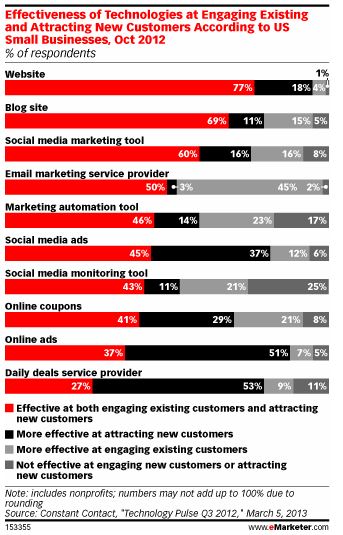
Fortunately enough, CEOs are starting to see the big picture. In a recent eMarketerarticle, blogging was listed as the second most effective tactic small businesses use to engage existing consumers and attract news ones, only eight percentage points behind websites.


If small businesses, who don’t have as many resources, as many employees, as much money or as much time, realize this, how is every Fortune 500 not following suit?

Blogging doesn't go out and annoy potential customers. Blogging brings those potential customers to your site. If you are able to collect and articulate relevant data and content that your audience cares about, the sales will certainly follow.

So go out and start writing, no matter what industry you are in. 

Friday, April 12, 2013

Friday Funday Post: The Shamrock Shuffle

This past Sunday, I had the chance to run in my second Shamrock Shuffle. While I didn’t get to run with my favorite partner in the world, Rachel, it was a fantastic day running five miles with all the guys.

Unlike last year, I am very happy to say that many of my close friends have gotten into running. I don’t think any of us really know why we do it; maybe to stay in shape, maybe to prove something or maybe to show off. Either way, I don’t care. Any opportunity to forget about work and real life problems and hang with the guys I love is a perfect day for me.


But this post, as the title suggests, is my chance to write about something just for the hell of it and I want to chat about the reasons I run.

Like everyone else, I don’t particularly enjoy running. I’d like to say that it clears my head, but it really doesn’t. Unless I am deep in thought about the run, I am usually thinking about money, work, girls, or what I am going to eat after the run. Either way, the mind is not clear.

And if you think I am trying to show off by saying I can run far, please. That just isn’t in my DNA.

Undoubtedly, I run to prove I can do it. Running is about pure determination. It is not about strength. It is not about physical stamina. It is a pure battle between you and no one else and I love it. If you can’t make that distance, you have no one to blame but yourself. If you can’t beat that time, you have no one to blame but yourself. No matter your goal, the only person stopping you is yourself.

Sadly, many aspects of life are not the same. At work, there are issues out of your control. With health, there are certain hereditary limitations some people can’t get over. For life, there are certain setbacks people are just born with. However, when it comes to running, no matter what, you control your conclusion. Wouldn’t have it any other way. 

Thursday, April 11, 2013

Publishers Can Not Pay Journalists for Traffic

The other day, I was reading an article in Digiday about certain publishers such as Forbes and Gawker, and brands for that matter, paying their writers based on the traffic their articles bring in or the number of new Twitter followers they accumulate. Can we put a stop to this right now?

As a former journalist and current blogger, I will be the first to admit that our profession has been lucky in the fact that we have never been paid based on results. Traders are based on the money they gain. Real estate brokers move up in the world based on the number and size of the deals they close. Teachers are retained based on the test results of their students. Journalists, whether their stories are read or not, are kept around as long as they produce good quality content.

Now, publishers are making a change and paying their writers based on the traffic they bring in. After all, the quality of a story can only be judged by the number of people who read it. However, the very premise of this tactic violates some of the basic rules of journalism.

First and foremost, journalists write for the community they serve. When they start to get paid based on traffic, the obligation moves from community to the owner or CEO of the publication/brand. If journalists start to get paid based on readership, no matter what the story is or how relevant it is to the community, every writer will have to ask themselves if this is a story the owner or editor would want to publish or will it bring in additional readers. Writers can not and should not be worrying this.

Quote color and paraphrase fact. It is a statement every journalism graduate has heard. But once these same journalists start to get paid based on readership, this rule in the back of their head will change. Even if you get your source to quote something every paper would love to hear, the writer will once again go back in his head and ask themselves if this is the quote that will bring in additional readers. Even worse, what if the writer is having a bad week and all of a sudden, he gets a source to admit to something wrong. However, it still isn’t juicy enough. If the writer’s salary is based on viewership, what are the odds the writer changes up that quote? We like to think this never happens, but we all know it does. If we move to this new system, we know how prevalent this could become. 

Once again, writers have gotten off easy by not being paid based on results. Offering more money for additional traffic is great motivation to get better stories, better sources and better quotes. Nonetheless, the negatives far outweigh the positives. Honest and ethical journalism, as we know it, will die if more publishers start to pay their writers based on traffic. 

Wednesday, April 10, 2013

SEC Allows Public Announcements on Social Media

It feels like it wasn’t too long ago that wealthy business owners were saying social media was just a fad and it was only a matter of time before it went away. Well, last week, the Securities and Exchange Commission took one more step to deter those naysayers as they are now allowing public companies to announce key announcements on social as long as they tell investors which sites they will use.

In a day when the press releases loses more and more significance and print journalism is hanging on by the threads, it is no shock the SEC decided to take this route. Furthermore, jumping back to those pessimists, the SEC claims part of the decision was made to help companies become more social literate.

After a company announces which social media site they will be using, via their website, press release, email, etc., investors are encouraged to then follow them on the channel and check back often for important data. Good in theory, but is this type of information too valuable for the online world?

Given that the shelf life for any tweet is now under four minutes, I feel the SEC made a mistake. While I love the fact that they are trying to encourage an older generation to catch up with the times, too much money is at stake with a platform that is foreign territory to some.

Let’s say company X chooses Twitter (which I hope most don’t), how many tweets are suitable for an announcement? One? Three? Ten? Twenty? Even though a user follows a company, that doesn’t mean they will see all their messages. I follow about 1,100 users on Twitter and I have never seen a tweet from at least half of those.

As someone in the industry, I know how to set up listening tools and lists to block out all the other news coming my way, but many don’t know how to do this. Keep in mind, I use social to basically disseminate and acquire new information. If I miss something, I miss it. However, when it comes to public traded companies, real money is at play. It is just too risky.

If I was in investor, I wouldn’t be too happy with the SEC right now.